
-
Hi guest! As you can see, the new Wizard Forums has been revived, and we are glad to have you visiting our site! However, it would be really helpful, both to you and us, if you registered on our website! Registering allows you to see all posts, and make posts yourself, which would be great if you could share your knowledge and opinions with us! You could also make posts to ask questions!
You are using an out of date browser. It may not display this or other websites correctly.
You should upgrade or use an alternative browser.
You should upgrade or use an alternative browser.
Book Discussion Opinions on the Munich Manual of Demonic Magic?
- Thread starter misterqar
- Start date
-
- Tags
- munich manual
Talk about a book(s)







- Joined
- Sep 22, 2024
- Messages
- 296
- Reaction score
- 435
- Awards
- 4
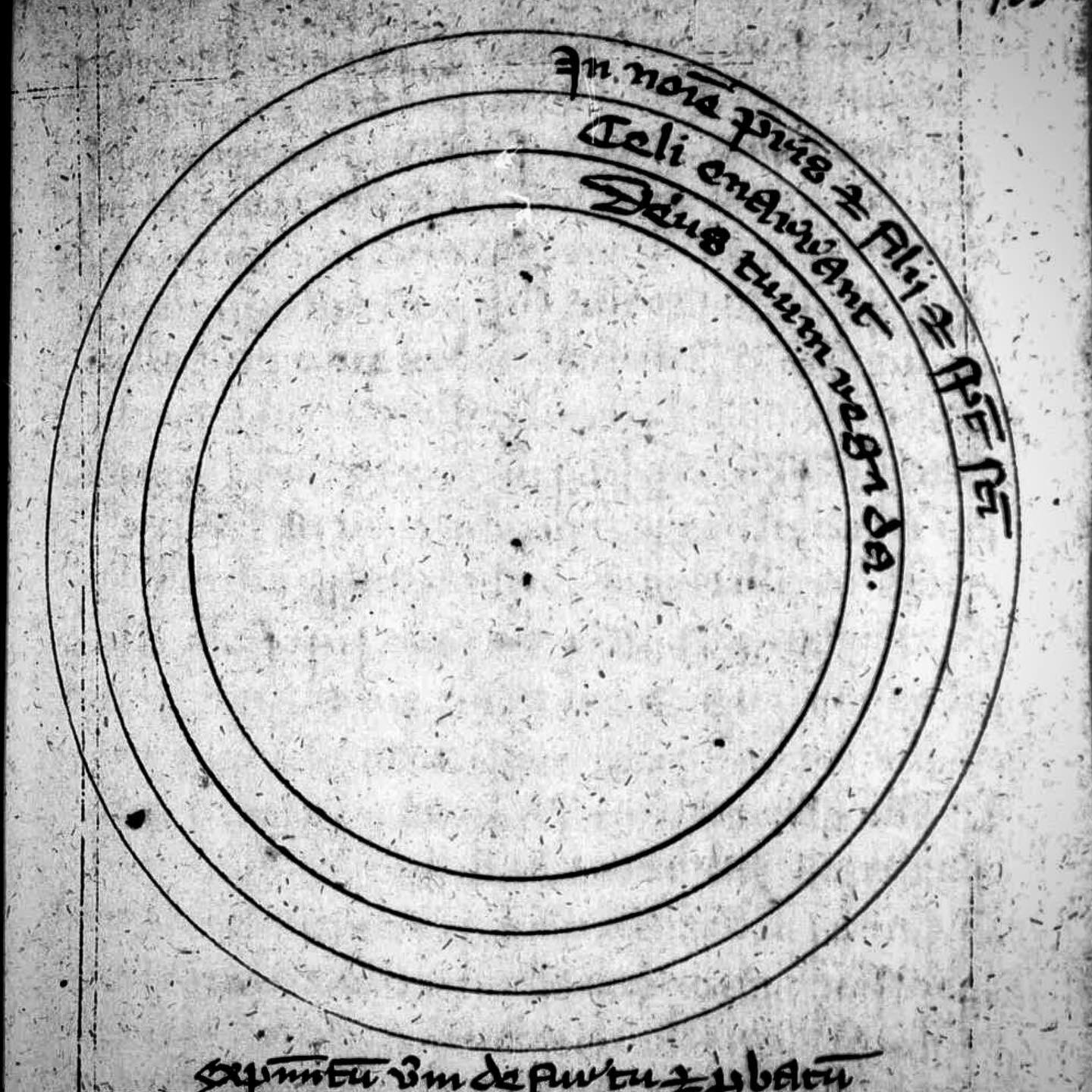
Protective Floor Circle from an elaborate scrying ritual that requires a seer to gaze into his own polished thumbnail to obtain information from demons such as Satan, Belzebub, Astaroth, Berith, Azraro, and Rotunda. At the beginning of the ritual, their names are to be whispered into the seer’s ear three times.
In Hebrew, the ritual is called, Sarei shemen, “the princes of the oil” or “the princes of the thumb(-nail)”. The Jews borrowed the practice from Babylonians while in captivity which in turn was handed down from the Sumerians which makes it one of oldest technologies for communing with the unseen.
From Clem 849 also known as the Munich Manual of Demonic Magic or Liber incantationum, exorcismorum et fascinationum variarum written in the 15th C.
Post automatically merged:
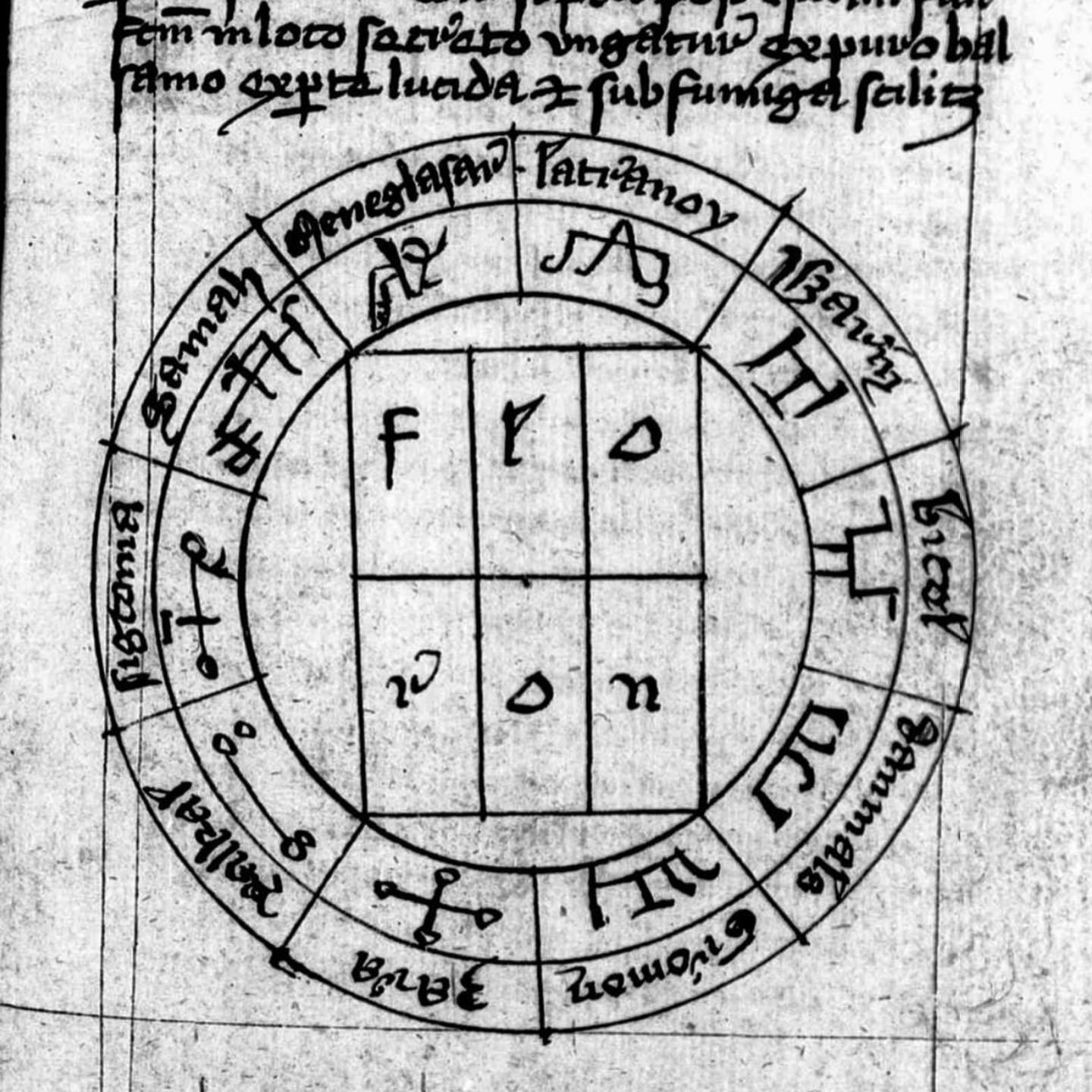
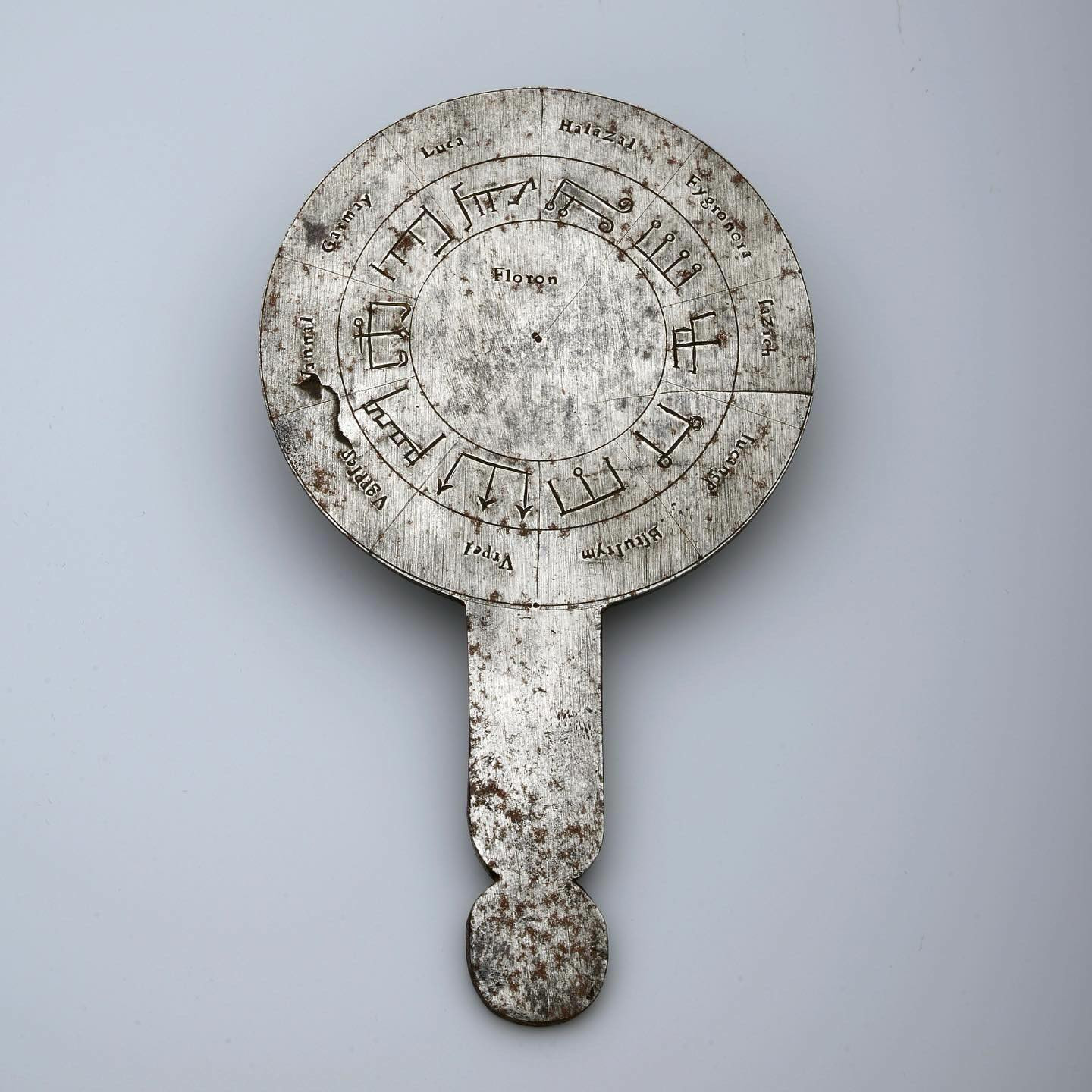
The Mirror of Floron: A 16th C Scrying Mirror
—
Above is an iron scrying mirror designed to summon the demon Floron in the form of a mighty, armed knight upon a horse and bind him to reveal the secrets of the past, present and future. It’s made to the specifications found in the 15th century Latin manuscript Clem 849 known as, The Munich Manual of Demonic Magic (“Liber incantationum, exorcismorum et fascinationum variarum”). The manuscript gives two versions of the operation on Fols 37r-38r and 38r-39v and one figure on 37r (see photo 2). Since the names and characters on this mirror differ somewhat from those in the manuscript, there were likely other versions of this ritual known at the time. Other scrying rituals such as those found in the Picatrix and Gent 1021A, although different, include similar figures where the area the spirit appears is enclosed within a segmented circle with spirit names.
Various surfaces are used for scrying such as mirrors, water basins, pools of ink, thumbnails, blackened palms, and (in medieval Europe) polished sword blades. Judging from the mirror design, it functions more like a sword blade than a traditional mirror. The text even explains that the device should be “shinny and bright like a sword”. It should be made in a secret place, anointed with a balsam, fumigated, and held by a virginal boy.
Courtesy of: Mathematisch-Physikalischer Salon, Staatliche Kunstsammlungen Dresden.
Post automatically merged:
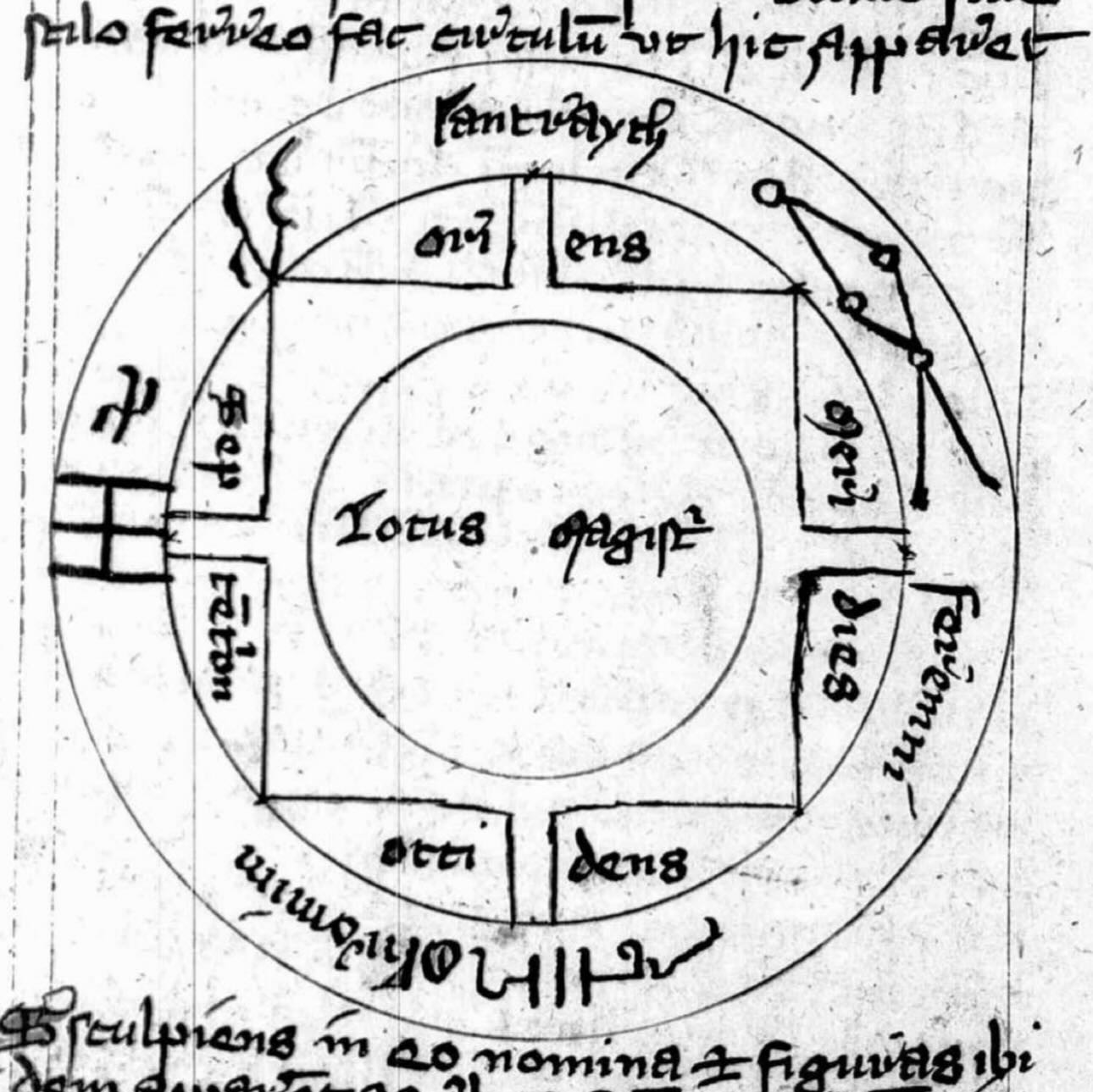
For Obtaining a Spirit in the Form of a Horse, from the 15th C Munich Manual of Demonic Magic (BSM Clem. 849, fols. 23v–25v), containing a ritual diagram corresponding to a mandal-style magic circle with four gates.
(Depicted in image 1. Image 2 and 3 depict the mandal from Tabasi’s Shamil)
TRANSLATION
I also wish to share with you the manner in which a horse—that is, a spirit in the form of a horse—may be obtained, which will carry you both over waters and over land, over hills as well as plains, wherever you may wish.
First, on the sixth day of the Moon, on a Tuesday, while fasting…


- Joined
- Jun 16, 2024
- Messages
- 20
- Reaction score
- 42
- Awards
- 1
I’ve read the excerpts published as Forbidden Rites, by Kieckhefer. These are my own opinions.
Upsides:
Downsides:
Upsides:
- Good use of symbols and names in magical circles and, a correct understanding of how to use them for attracting and repelling them.
- Decent examples of rituals for specific ends, not just evocation formula + list of spirits.
Downsides:
- Operations that are a little far fetched (same issue that plagues certain other manuals). i.e.: spirits that are extremely difficult to call and to work with, at least as the instructions go, evoked as if nothing.
- Not a complete reproduction of the manuscript. It’s a decent, commented partial reproduction.

- Joined
- Feb 8, 2026
- Messages
- 9
- Reaction score
- 9
Yes!it is that book of forbidden rites?
Post automatically merged:
Yes, I just got that onejust asking- Does the Munich manual of demonic magic translated by John Quail have the unabridged text translated from Latin?
maybe someone who has this edition can drop a feedback. Thanks!
Last edited: